How Much House Can You Actually Afford? A Simple Way to Know Before You Start Looking
By Susan Roberts, Associate Broker, eXp Realty
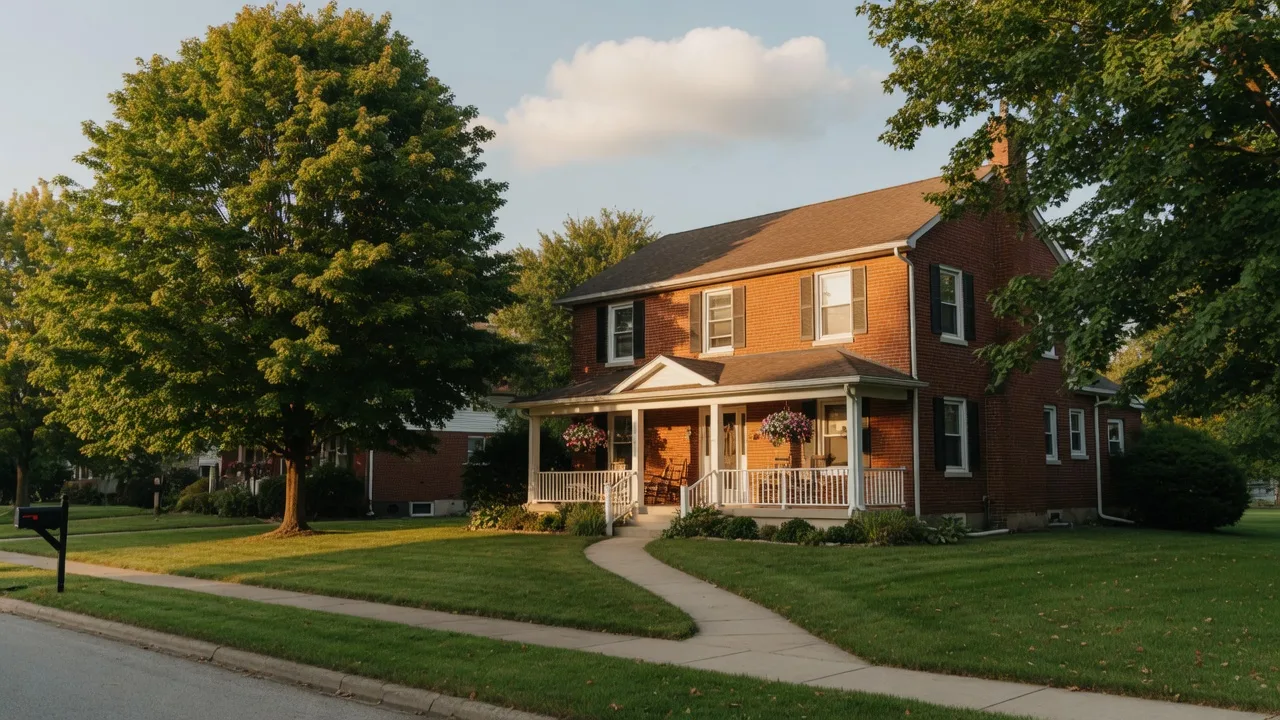
"How much house can I afford?" is the question I hear more than any other, and it comes from just about everyone: first-time buyers in Fishers, families moving to Carmel, and empty nesters getting ready to downsize in Noblesville or Westfield. I love this question, because it is the smart way to start. Before you scroll listings or fall in love with a kitchen, you need to know your number.
And here is the honest truth: the right answer is about peace of mind, not about maxing out what a lender will hand you. A lender's number tells you the ceiling. Your number tells you what lets you sleep at night. Let me walk you through the simple math, show you what it means here in Hamilton and Boone County, and give you a calculator you can use tonight at the kitchen table.
This article is one part of Susan's permanent, always-updated resource: How Much House Can You Afford? A Guide for Buyers and Downsizers. Bookmark it and check back, because we refresh the market numbers as they move.
The Two Numbers Lenders Actually Care About
Lenders use a rule of thumb called the 28/36 rule. It's been around for decades, and it is still the fastest way to check whether a house payment fits your life. Here is how it works:
- 28% of your gross monthly income (your pay before taxes) can go to housing. That means your mortgage payment, property taxes, homeowners insurance, and any HOA fees combined.
- 36% of your gross monthly income can go to all your debts added together. That's your housing payment plus car loans, student loans, credit card minimums, and any other monthly obligations.
Let me make it real with a simple example. Say your household brings in $10,000 a month before taxes. By the 28 rule, your housing number is $2,800 a month. By the 36 rule, all your debts together should stay under $3,600 a month. If you already have $500 in monthly car and student loan payments, that leaves you right around $3,100 of room, which keeps you safely inside both numbers.
One more thing I always tell my clients: 28% is the maximum, not the goal. Many people find they feel far more comfortable around 25% of income going to housing. Life is full of surprises, and a payment with a little breathing room is a payment that never keeps you up at night.
What That Buys You in Hamilton and Boone County
Now let's bring it home. Hamilton County's median home price is around $475,000, which is the highest in central Indiana, and for good reason. The schools, the amenities, and the quality of life are outstanding. At today's rates near 6.7% with 20% down, that median-priced home runs roughly $3,400 to $3,600 a month once you include taxes and insurance.
So who can comfortably afford that? A household earning around $12,000 a month fits that payment within the 28 rule. If your household is closer to $10,000 a month, you'll find your sweet spot in the $350,000 to $400,000 range, where there are strong, move-in-ready options in Noblesville, Westfield, and Whitestown. And if you like the idea of less upkeep, condos and townhomes in the $200,000s give you plenty of great choices, including popular townhome communities in Zionsville and Carmel.
If you are downsizing, here's the part that can change everything: a lot of my clients own their current home free and clear. When you sell a paid-off larger home and move to something smaller, the math flips completely. Many downsizers end up with no mortgage at all, or a very small one, especially in a 55+ community where the price is a fraction of what they sold for. That's not a dream, it happens all the time in Hamilton County.
Try it yourself: How much can you afford?
Plug in your numbers and hit Calculate. This uses the lender's 28/36 guidelines, so you get a clear first look at your range.
This is an estimate to get you started. Your lender will run official numbers for you.
Down Payment Myths, Busted
Let's clear up the biggest myth I hear: that you need 20% down before you can even think about buying. That simply isn't true. There are solid programs that let you buy with 3%, 5%, or 10% down, and some that go even lower. Waiting for a perfect 20% can cost you years of building equity while prices keep climbing.
Let me show you the real difference on a $400,000 home. A 3% down payment is $12,000. A 20% down payment is $80,000. That is a huge gap, and for many families, $12,000 is reachable while $80,000 feels years away. Yes, a smaller down payment means a higher monthly payment and private mortgage insurance, but it also means you can start building your own home equity now instead of paying someone else's rent while you save.
The right down payment isn't about what sounds impressive. It's about what lets you buy without draining every dollar of your savings. That emergency fund is part of your affordability picture too.
The Costs People Forget
The purchase price is only part of the story, and I see buyers get surprised by this all the time. Your real monthly number includes property taxes, homeowners insurance, and HOA fees if the home is in an association. Those are not optional extras, they are part of the payment, every single month.
Here in Hamilton County, property taxes are notable, and they push the average monthly housing cost above the national average. That is simply the cost of living in one of the most desirable counties in the Midwest, and it's worth it to most families. But it means you should never shop based on price alone. Always ask for the full payment breakdown, including the tax bill and the insurance estimate, before you decide a home fits your budget.
Run Your Own Numbers
You don't need a spreadsheet or a finance degree to do this. Grab a piece of paper and try it: multiply your gross monthly income by 0.28 for your housing cap, and by 0.36 for your total debt cap. Subtract your monthly debts from that second number. Then, because taxes and insurance are real costs, leave yourself $300 to $500 of room on top of that.
What's left is your starting range. It isn't a lender's quote and it isn't a guarantee, but it is your honest, personal number, and it will make every listing you look at feel clearer. When you're ready for the official picture, a lender runs your exact numbers, and I help you line everything up from there.
The Bottom Line
Don't max out. I know it's tempting to stretch for the biggest house the numbers will allow, but the right home is the one that leaves room for maintenance, for savings, for the life you actually want to live. A payment you can handle without stress is a home you get to enjoy.
For more than 25 years, I've helped buyers and downsizers across Carmel, Fishers, Noblesville, Westfield, Zionsville, and Whitestown find homes that fit their budget and their lives. As an SRES, Senior Real Estate Specialist, I particularly love helping empty nesters make the move to a 55+ community or a smaller home with total confidence. That starts with knowing your number, and now you do.
Let's Find Your Number Together
Call or text me at 317-777-9146, or book a free consultation here. We'll run your real numbers and map out a plan that fits your budget and your life.